
Move to Cure 2026

What is Move To Cure
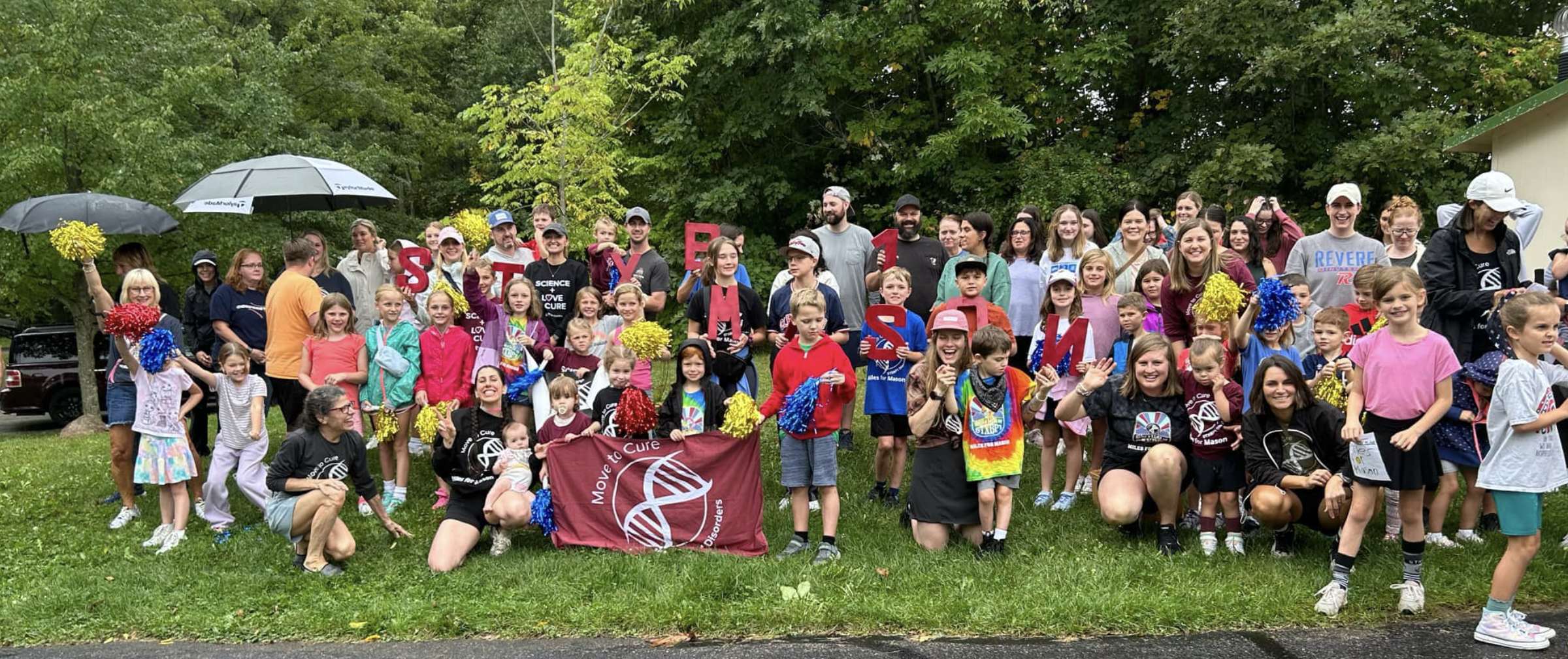
Move to Cure is the STXBP1 Foundation's largest annual community fundraising campaign. Every September, families, friends, and supporters around the world create teams, raise funds, and move in whatever way works for them — walking, running, rolling, biking, dancing, or creating their own challenge.
Together, we're moving toward something much bigger: better treatments and a cure for STXBP1 disorders.
Every Move Brings Us Closer to a Cure
Join the STXBP1 community this September and help us raise $100,000 to accelerate research and the development of better treatments for STXBP1-related disorders.
START A FUNDRAISER - CREATE A CUSTOM T-SHIRT
Double Your Impact This September
Thanks to a generous $25,000 matching gift from Clara Inspired, created by Casey and Kristen Baum, every dollar donated to Move to Cure during the matching period can go twice as far.
$25 becomes $50. $100 becomes $200. $500 becomes $1,000.
How it Works
1. Create Your Page
Start your individual or team fundraising page.
2. Make Your Move
Walk, run, roll, ride, dance — choose something meaningful to you.
3. Rally Your Community
Share your story and invite friends, family and coworkers to support your team.
Resources For Fundraisers
Fundraising Guide
Team Captain Guide
GoFundMe Pro Instructions
Move To Cure Outreach Toolkit
Move to Cure Shirts

Event Origins: Emma Rose and a 5K
What began as one of the STXBP1 Foundation’s earliest fundraisers has grown into the Move to Cure campaign we know today. The campaign traces its roots to a 5K held in Ohio in October 2017, organized by Jennifer Clatterbuck in honor of her daughter, Emma.
Emma’s Story
My name is Emma Rose. I cannot walk or talk, and I continue to face significant challenges with seizures. Over the years, my family has pursued second opinions, tried different medications, and even explored VNS surgery in hopes of finding better seizure control.
When my seizures are under control, I work hard and make important developmental progress. Unfortunately, periods of severe seizures can sometimes take some of that progress away. Communication has also been a challenge because of a significant tremor, weakness in my right hand, and limited fine motor control in my left. After years of searching for the right communication system, I found an eye-gaze device that works for me—and learning to use it has become one of my biggest accomplishments and priorities.
My seizures began shortly after birth, followed by infantile spasms at just two months old and significant developmental delays. When I was five years old, my family finally learned the cause: a change in the STXBP1 gene.
At the time, there were very few answers. My doctors had never encountered STXBP1-related disorders, and researchers were only beginning to understand them. My family soon connected online with other families facing the same diagnosis. From that small community grew a determined group of parents, caregivers, researchers, and advocates united around a common goal: to better understand STXBP1, accelerate the search for treatments, raise awareness, and ultimately find a cure.