
STXBP1 Therapeutic Pipeline
“When will there be a treatment for my child?” This is often the first question asked by a parent with a newly diagnosed child once they learn “What are STXBP1-Related Disorders?” and find out there is no cure yet. We started the STXBP1 Foundation with a key goal to kickstart and advance therapies for our kids and our community. We can share hope that treatments are on the way.
The STXBP1 Foundation closely monitors and invests in multiple treatment approaches with the ultimate goal of cures. Some of these treatments are STXBP1-specific; others may help alleviate symptoms.
The graph below shows the status of known treatments in development as of Q3 2026.
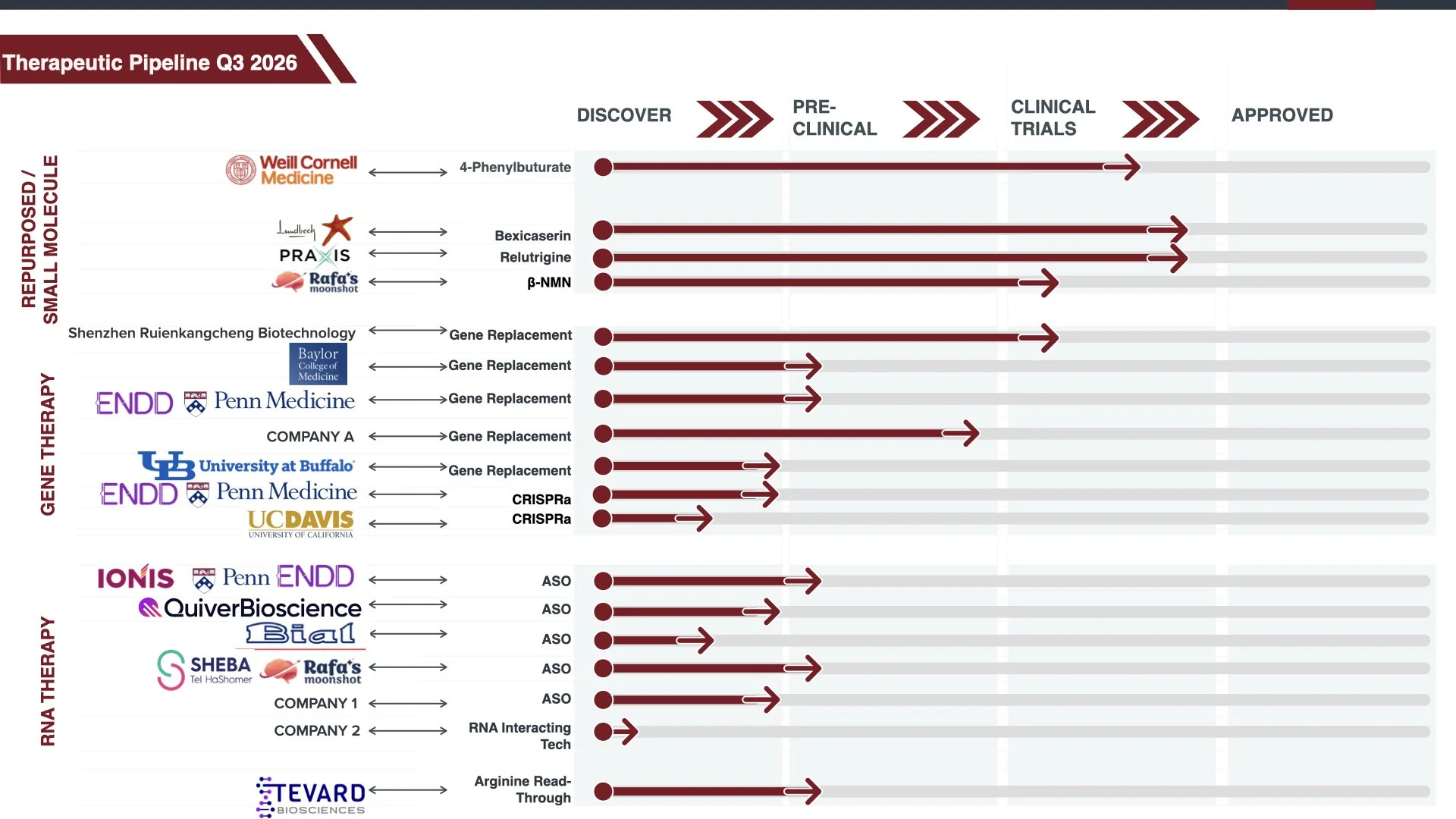
Development of STXBP1 Therapeutic Pipeline from 2019
In 2019 at the foundation’s first scientific meeting, the team mapped out four roadmap priorities to advance STXBP1 research. Following this initial roadmap, and with the amazing work of our research and family community, we have made tremendous progress.

In the three years from 2020 - 2022, we developed a disease concept model, multiple natural history studies, launched an early phase clinical trial for 4-phenylbutyrate, and at the end of 2022, more than 9 potential therapies were in development for STXBP1 disorders.

In 2026, we are launching our Fast Forward with Impact three year strategic plan (2026-2028).
The therapy pipeline for STXBP1 disorders continues to expand. In Q3 2026, there are more more than 18 potential therapies in development, with multiple therapies in preclinical and clinical development. These milestones highlight our community’s progress with our STXBP1 Fast Forward with Impact strategic plan.
Now Is The Time For The STXBP1 Community To Activate
If there are already some pharmaceutical companies developing drugs for STXBP1, do we need to do anything else? The answer is YES!
Our community knows STXBP1 better than anyone else. We need to inform clinical trials with what matters to patients, and drive the development of endpoints that matter
Any single therapy can fail in development or in clinical trials. We must encourage and support as many therapy programs as possible to maximize the likelihood of developing effective therapies and to minimize the downside of any individual therapy failing
A single therapy can be deprioritized by a biopharma based on internal prioritization or market conditions. We need to continue to highlight that STXBP1 is an attractive target, strengthen and build industry relationships, demonstrate our community is activated, and truly understand the size of our patient population
Potential therapies can be initially developed in academia, but they then need an industry partner for later development and/or clinical trials. Our efforts to understand STXBP1 and develop clinical trial readiness de-risks this transition and makes STXBP1 attractive to industry