Building a Rare Disease Ecosystem with Rafa’s Moonshot
Life Sciences Today Podcast Episode #49
Life Sciences Today Podcast Episode 49
Developing a powerful hub for STXBP1-related disorders
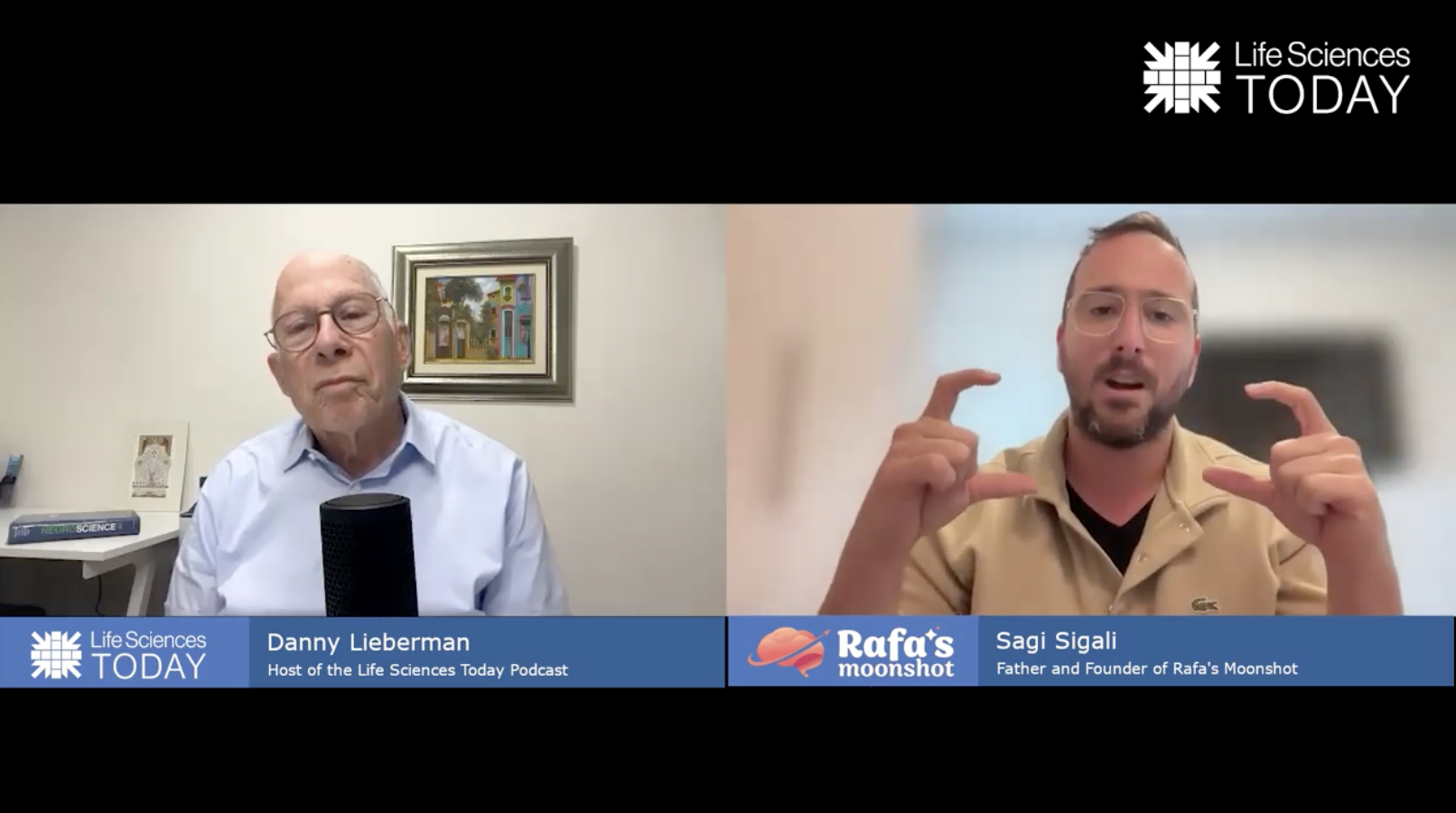
Sagi Sigali of Rafa’s Moonshot was interviewed on Feb 20 by Daniel Lieberman, the host of Life Sciences Today podcast. Sagi is a longtime partner in advocacy of the STXBP1 Foundation and is located in Israel. The interview’s outline is copied from the Life Sciences Today website below. You can listen or watch the interview on your favorite podcast channel linked from their site here.
(from Life Sciences Today podcast)
We’re excited to be back for another episode of the Life Sciences Today Podcast by Healthcare IT Today. My guest today is Sagi Sigali, Father and Founder of Rafa’s Moonshot – a non-profit dedicated to Landing a Cure for STXBP1. Sagi and I discuss how Rafa’s Moonshot is turning a rare genetic disorder (STXBP1) into an investable, de‑risked therapeutic opportunity. Sagi explains how his tech/entrepreneur background shapes a for‑profit mindset around fundraising, biopharma partnerships, and making rare disease indications attractive to industry. They cover building a global network, leveraging grants and consortia, working with academia/CROs, and planning the flip from nonprofit to for‑profit. They also dig into industry “anti‑patterns,” including copy‑paste development strategies, and explore a strategy to start from the drug label and work backwards. Sagi closes with his vision for a complete STXBP1 solution, a new CNS neurogenetic research center in Israel, and a stronger Israeli life sciences ecosystem.
Check out the main topics of discussion for this episode of the Life Sciences Today podcast:
How does Rafa’s Moonshot actually create value for drug and biotech companies working on STXBP1?
What does the market and patient landscape look like for STXBP1 as a rare disease?
How has your background as a serial tech entrepreneur influenced your strategy in rare disease therapeutics?
What are you doing to make STXBP1 attractive enough to enter big‑pharma pipelines?
How do conversations with academics, clinicians, CROs, and biopharmas translate into real progress?
What is your consortium model, and how do grants and non‑dilutive funding fit into it?
How are you using CROs in preclinical work and thinking about IP and cell line development?
What do you see as the biggest anti‑pattern in rare disease/drug development today?
What are the top three things you want to achieve for STXBP1 patients in the next year?
What is your five‑year vision for STXBP1, for Rafa’s Moonshot, and for the Israeli life sciences ecosystem?
Now, without further ado, we’re excited to share with you the next episode of the Life Sciences Today podcast.